Tuesday, June 21, 2011

LEW SAYRE SCHWARTZ (1926-2011)

Lew Sayre Schwartz died a couple of weeks ago (June 7th). Schwartz is best known as one of several early Batman artists who were anonymous to comic book fans for years because they did "ghost" work for Bob Kane. Kane, co-creator of Batman, outsourced his Batman work to other artists, but then signed his own name. Schwartz worked for Kane from 1948-53.1 Schwartz moved on to ghosting a couple of comic strips before going into the advertising field and producing commercials. In 1982, he produced a documentary on Milton Caniff, but his association with Caniff started long before that.

TwoMorrows publisher Jon Cooke did a comprehensive interview with Schwartz for Alter Ego2. Schwartz told Cooke that he grew up loving the comic strips, and got turned on to Milton Caniff's work at age 13. He began a youthful correspondence with Caniff, which evolved into Caniff being something of a mentor and father figure to Schwartz. Though Schwartz never made a name for himself in strips, he worked on staff at King Features both before the war and during the 1950s. Schwartz joined the National Cartoonist Society in 1946, in the first year of its founding by Caniff and others. To Schwartz, comic books were inferior to comic strips, and he didn't mind that his Batman work was anonymous. In Alter Ego, he and Cooke had this exchange:
SCHWARTZ: I didn't mind at all the fact that nobody knew about me. In some respects, I didn't want Caniff or Alex Raymond to know that I was drawing "Batman," and they were friends of mind.
COOKE: Really? You didn't even tell Caniff that you were drawing "Batman"?
SCHWARTZ: Never...I never told Milt.
COOKE: Were you ashamed?
SCHWARTZ: At that particular time it was beneath my status...or my objectives. Let's put it that way.

Even after Schwartz left comics, the two kept in touch. As told in the documentary, as well as the Cooke interview and R.C. Harvey's Caniff biography, Caniff helped him out of a non-comics jam. Schwartz and his production company were working on the title sequence for Stanley Kubrick's "Dr. Strangelove." Fearing the film's sentiment, the military had cut off their cooperation. The problem was, Kubrick needed footage of the atomic bomb explosion for his ending. Kubrick asked Schwartz if he had any contacts, and Schwartz said "I only know one guy." Caniff, from his WWII work and post-war military boosterism, especially of the Air Force, was a friend of the military. "Why don't you ask me for something hard," Caniff said. He then a called a general who then talked to Schwartz and had only question, "Do you need 16mm or 35mm?"

Schwartz self-financed a documentary about Caniff in 1982. It includes Schwartz interviewing Caniff (see picture at top) as well as Noel Sickles, Mort Walker and others. It may be the only video interview footage of Sickles in existence. The documentary relates many interesting anecdotes and is a nice look at Caniff at age 75, still plugging away at his craft. The video is bookended by fellow Eagle Scout Walter Cronkite, giving due praise to Caniff as a national treasure.

I'm racking my brain trying to think of where and when I met Lew Sayre Schwartz. It was at a comic show in 2002. I'm not sure what we talked about as the memory is very fuzzy. He had a copy of his Caniff documentary, but none for sale. He said I could order one from him and he'd mail it to me. He sent me a postcard after receipt of the check, letting me know they were doing the transfer to VHS and would mail it out soon. Lew Sayre Schwartz was a very nice guy who led an interesting life.

The Caniff documentary was only sold briefly by Schwartz himself, but there was no commercial release. Schwartz followed up his Caniff documentary with one on Norman Rockwell. DVD copies are available here.

1Schwartz's earliest Batman work has been collected in Batman Archives volumes 6 and 7. Volume 6 can be found for $25-40, but 7 is rare, going for around $100.

2Alter Ego #51 from TwoMorrows Publishing can be purchased here.

Wednesday, June 15, 2011

MEDIASCENE - COMICS NEWS OF 35 YEARS AGO!

In anticipation of meeting comics legend Jim Steranko at this year's Cincinnati Comic Expo, I pulled out an old issue of Mediascene. Mediascene (formerly Comixscene and later Prevue) was Steranko's bi-monthly periodical that had features and news on comics and genre movies. It was a pioneer in the comic book news field, treating comics as a serious subject a decade before the Comics Journal and Amazing Heroes came around. The issue on hand is #19, from May-June, 1976. Here are some clippings that present an intriguing look at the industry of 35 years ago!


Mediascene was printed like a newspaper, in two tabloid-size sections. The picture above was the cover to the second section, cover comics news. I was shocked to see not only the picture but the article. The 'Superman vs. Muhammed Ali' comic1 is a now-legendary art job by Neal Adams, in which real-life super hero Ali and Superman join forces. It was just reprinted last year in two separate hardcover editions. So, what happened to Kubert between the above blurb and the book's publication in December 1977?

Legendary letter, John Workman, told 'Comic Book Artist' magazine that Ali's people didn't like Kubert's art. DC Comics sent them samples of other artists to choose from, and the one they preferred was Kurt Schaffenberger. DC convinced them to go with fan-favorite Neal Adams over the dependable but less dynamic Schaffenberger.2 Deferring to the master, Adams has obviously used Kubert's drawing as his cover layout.

Just a snippet of a long article on editorial changes at DC and their new royalty policy. 'Hey, comic creator, thanks for creating a new character that we will print and merchandise in perpetuity. Here's $10. Save it, and in 30 years buy a statue we've made of the same character. And hey, free cake beats profit participation any day.' Still, it was the best deal going. The "Colletta" referred to in the article is Vince Colletta, who had just been named DC's Art Director, a post he would hold for the next three years.Many may scoff at this praise for Colletta, generally derided as an inker, sacrificing quality in pursuit of speed. I've never been a Colletta hater, though his habit of erasing out some pencils was odious. A fresh look was taken at Colletta's work in this book from last year. What interested me is the idea that now that he wasn't on a deadline crunch, his inking would be better. Well, did it get better?

The rumored story was either heavily edited or went unpublished. The only romance book DC had in 1976 was YOUNG LOVE. At the time of this issue of Mediascene, Young Love was in the middle of an 8 month hiatus - 11/75 - 8/76. All the issues carried the code seal, and the book was cancelled the following April.

After DC stopped publishing Tarzan comics, Marvel started publishing them about three months later. So, what happened to the Burroughs' comics company announced in the article? According to a 2010 message board post from Evanier - "It may interest folks that when H-B took the rights away from Charlton, their initial plan was to start a new company called Hanna-Barbera Comics and publish books themselves. They went out and found that the major comic book distributors (mainly Independent, which was DC, and Curtis, which was Marvel) had such a lock on newsstand distribution that it was impossible to get space on the newsstands. A few years earlier, the Edgar Rice Burroughs company had the exact same experience when they took the rights to Tarzan away from DC and tried to start their own company. Like H-B, they ultimately had to admit there was no way to get their product distributed and they sold the package to Marvel...and regretted it."

This blurb mentions four DC books that have been shelved for the moment. MISTER MIRACLE and BLACK LIGHTNING did later appear, but what of the other two? I'm guessing PANZER was a war book, but what could SEXTET have been? The same article mentions a new Seven Soldiers of Victory title that never emerged, as well as the news that Detective Comics was going bi-monthly.

I hope "The Star Wars" works out for Roy and Howie. If the movie tanks, maybe they can make a go of the comic anyway.

In other movie news, Superman is in pre-production. According to Mediascene, Marlon Brando has been signed to play Jor-El. "[DC Comics President] Sol Harrison told us he would like to see either Telly Savales or Gene Hackman appear as Lex Luthor. Burt Reynolds is still not signed for the title role, and as more time passes, his possible involvement in the film diminishes." Oh, Burt and Telly...why oh why did we have to wait until "Cannonball Run II" until you found a project to do together?!?

Finally, the issue ends with a nice two-page spread detailing the opening and curriculum of the Joe Kubert School of Cartoon and Graphic Art. The school recently celebrated its 35th year by changing it's name to The Kubert School. I'm guessing with all the work that went into founding the school, Joe wasn't too upset with losing the Muhammed Ali job!

1Yes, the real title of the comic is "All-New Collectors' Edition" #C-56. But then, you knew that already.

2Workman, John, "Ringside Seat", Comic Book Artist Collection, TwoMorrows Publishing, 2000

MEDIASCENE 19, May-June 1976, published by Supergraphics. Jim Steranko, Publisher and Editor.


Tuesday, June 7, 2011

RECENT CANIFF AUCTIONS - UNBID EDITION

watch auctions of Milton Caniff-related items pretty regularly. A majority of them go unbid, usually due to the seller's inflated expectation of what something is worth. For example, there are currently three separate auctions for Steve Canyon Magazine #18. The condition of the books are about the same, but the starting bids are $16, $20 and $35. A nice copy can be generally had for $7-10, so it's no surprise these auctions will likely come and go without a sale. This week we'll look at interesting items that weren't overvalued, but still went unbid.


The J. Halpern Company, also known as Halco, was one of the 'Steve Canyon' licensees during the time late 1950s television series. Halco was a Pittsburgh-based toy company that made, among other things, costumes and dress-up clothes for kids. This first item is a Steve Canyon Halloween costume, produced under the "Super Halco" brand hame. This is the only example I've ever seen of this costume, and it appears to be in terrific shape. It was a steal at $10, but was not bid on.

Also from Halco, this children's dress-up Steve Canyon flight suit. The seller noted how he had a hard time finding any information on it, and no wonder. This only other time I've seen one of these is in the database of the Cartoon Research Library. The seller thought it was from the 1940s, but it's from 1959. The seller was correct in describing it as "quite rare." Not bid on, but it was a good deal at $29.00


'Terry & the Pirates', like many comic strips in the '30s, was also a radio program. Every afternoon, millions of fans, including Milton Caniff, followed the 15-minute installments of Terry, Pat and company. One common gimmick involved sendaway premiums for the program's listeners. This one comes from late in the show's run, from the show's sponsor, Quaker Oats. The brass base has adjustable bands with small images of dragons and brass band holding the aluminum tube on top. The rest you must glean from the vintage ad. I'm not too sure what a colloid is, but I think it's a microscopic particle or something. Hake's price guide puts this item between $100-200, but it went unbid on at $40.00.

Most cartoonists who did speaking engagements would incorporate a "chalk talk," a drawing demonstration on a board or large sheet of paper. By the 1980s, when this piece was created, Caniff had five decades of chalk talk experience. According to the seller, this was done in Dayton, Ohio. Caniff must have been delighted to be in front of a hometown crowd. This was one of three sketches up for auction. This one of Steve Canyon went unbid at $400, though another 'Canyon' character, Cheetah, did sell at that price.


From our "half a Terry is better than none" department comes this partial Sunday page. This one is frpm October 4, 1942. According to the seller, it's from the estate of the late Marvel Comics great Don Heck. This one has been relisted several times, first for $1200, then $950 and $900. Now it's back to $1200!?! I did see another partial from '43 that sold for $820. This one is the victim of high expectations.
Minimum bid of $1200.

Tuesday, May 31, 2011

CANIFF NEWS - MAY/JUNE 2011


CANIFF, the new art book from the Library of American Comics, will be released in July. Meanwhile, the book's editor and designer, Dean Mullaney, occasionally teases us with goodies from the upcoming tome. Here's a recent post.
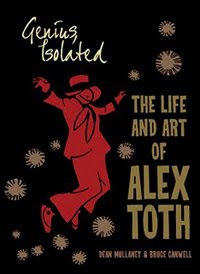
Speaking of the LoAC, their recent book on Alex Toth has me paining at only being able to read a snippet before bedtime. "GENIUS, ISOLATED: The Life and Art of Alex Toth" is by Dean Mullaney and Bruce Canwell. They've struck a goldmine here, presenting stories from Toth's career, often from the original art. Toth was a devotee of Caniff, evolving into mutual admiration. For more on the book, here's a nice review by fellow Caniffite Randy Reynaldo.


The tenacious John Ellis has just provided an update on the upcoming release of Volume 3 of the "Steve Canyon" TV series on DVD. You can find that on the official blog. One problem is that the deeper he digs, the more gold he finds. A good problem to have, Caniffites! Ellis thanks us for our patience, but I think for something unseen by most for over 50 years, we can stand the wait a little. Volume 3 is available for Pre-Order.

A new exhibit opened this month at the Reading Room of the Billy Ireland Cartoon Library and Museum. 'Dick Tracy: Chester Gould's Blueprint Expressionism' offers a fresh look at everyone's favorite comic strip detective. The exhibit was assembled by Museum curator Jenny Robb and Pulitzer-winning cartoonist Art Spiegelman. The exhibit (details here), runs until August 19th.


Mark Ferenchik of the Columbus Dispatch tried to uncover the mystery of three intersecting roads named Caniff in this April 24th Article - Where We Live.


Steve Canyon is part of the montage in this George Perez cover for Comics Revue #300. The above was posted by Perez on his Facebook page, along with this description - "After experimenting on some private commissions, I decided to try my pencil tone-to color technique on a cover that would actually be published. On the left, is the original marker and pencil tone illustration I drew for the cover of COMICS REVUE #300. On the right is what it looks like after I digitally converted the grays to color. I think it makes for two very unique pieces. Hopefully the publisher-- and you all-- like the results."

We do, George. We do! "Steve Canyon" strip reprints have appeared in all but 32 issues over the magazines 25 year history. The strips currently running are from 1971 and include color reproductions of the Sunday strips. In addition to "Canyon", the magazine runs 18 other strips, including Alley Oop, Mac Raboy's "Flash Gordon" and Russ Manning's "Tarzan". It can be ordered from your comics retailer, Bud Plant or directly from Manuscript Press at PO BOX 336, Mountain Home TN 37684

Monday, May 16, 2011

WONDERFEST 2011

On May 14th I attended my second ever Wonderfest, the show for model & toy collectors of the sci-fi, horror and superhero genres. While I enjoyed the show and hanging out with some compadres, the show fell short of last year's (read that report here). Two of the things I was most interested in didn't happen. SFX legend Richard Edlund was going to be a guest, but he cancelled earlier this month. A highlight from last year was the premiere of the documentary "The Aurora Monsters: The Model Craze That Gripped the World." This year Wonderfest promoted the premiere of a sequel - "The Aurora Monsters & Beyond". Well, it's not finished, so all we got was a sneak peek. While the overall presentation was entertaining, it was a disappointment. Fortunately, Bossk DID show up.

The model contest displays were the highlight of the show for me. I'm amazed by the creativity, dedication and skill it takes to make models like those below. Some of you may see these and think, "That person has too much time on their hands." I think the exact opposite is true. We live in an age of bountiful entertainment wonders. Even if you're just interested in a specific genre, such as science fiction, the availability of the new along with the archive of the past is staggering. There is no way to see, do, read, enjoy it all. Someone with the time and attention to make models like these is always thinking of his next dozen projects. All the things he'd like to do as well as the work of others he'd like to enjoy. There will not enough time for it all. That makes the hours spent on the finished product all the more impressive.
A snowspeeder from "The Empire Strikes Back".


A 1:1 model of Nomad from "The Changeling" episode of "Star Trek". Fortunately, as its mission is to destroy all life, it appears to have been deactivated.


One of my obsessions left over from childhood is "The Black Hole", Disney's plodding, haunting answer to "Star Wars". Brightening up the unusually grim affair is the shiny silver and red robot named V.I.N.C.E.N.T., the cleverest and most capable crewmember of the Palomino. Here someone has made a life-size replica. Could a working model be far behind?

That's about it from me. I recommend making plans for Wonderfest 2012. Where else are you going to get your Hannibal Lecter heads?!?

Monday, May 9, 2011

CITIZEN SUPERMAN


With the above panel, from Action Comics #900, a media firestorm emerged. The news of Superman's controversial decision hit the mainstream thanks to Fox News, the Washington Times, the New York Post, becoming international news. Superman's words came from David Goyer, a writer best known for scripting the recent Batman films and the next Superman movie. Many fans saw the story as a smack in the face, and DC's co-publishers quickly backpedaled, stating that Superman "embodies the best of the American Way."

Here with a guest editorial is longtime comics fan Jerry Smith -

AN OPEN LETTER TO DC COMICS -


My first comic book was Superman #193. My mom bought it for me before I could read, but I knew who Superman was. I later found out the main story was an “imaginary” tale where Lex Luthor killed Superman and heroes were lined up for miles to pay their last respects to his dead body. That’s how I feel now.

I’ll save you the recounting of my Superman comics, statues, artwork, action figures, etc. Let’s just say I’m a devoted, long-term fan. I love Superman. And of course I am writing about the tragedy of Superman supposedly renouncing his American citizenship in Action Comics #900.

Let me get this out of the way: Superman would never, EVER renounce his American citizenship. Clark Kent was raised in Kansas in by decent, loving parents. By all accounts and Superman’s past actions, this led to a well-adjusted son who loved his (adopted) country. Such a person would grow up loving their country and would not renounce his citizenship under any circumstances.

I’ll be honest, it was hard to read, and harder to type, Superman saying “I am renouncing my U.S. citizenship.” Why would he do this? Because he is “tired of having [his] actions construed as instruments of U.S. policy?” Who thinks that and why would it matter? Superman doesn’t have the right to protest injustice without denouncing America? That’s a major part of what it means to be an American! That is the American Way. And he thinks that is a reason to turn his back on his country?

The language of Superman’s traitorous statement has obviously been carefully considered. Take the word “renounce.” To me, the word “renounce” means “I reject you. I reject all that you are and ever will be. I want nothing to do with you, your policies or what you stand for.” Is that DC Comics’ intention? If so, why? Do you hate America? I really have to ask the question.
This story was negative and ham-handed. Superman wants a more global focus? I thought he already had one. But considering that is true, why did he have to stop being an American? Why did he have to reject and spit on America? There was a great Silver Age story where the United Nations bestows on Superman honorary citizenship of every country in the world, unanimously voted on by those countries. Why didn’t you refer to or recreate that story? No, you had to “stick it” to America, not make Superman a citizen of the world. Why didn’t that even occur to the writer or editor of this story? It implies a real lack of love for the U.S.A. That’s fine if its how you feel, but why force that on Superman?

Like it or not, Superman is an American icon. I love the part in John Byrne’s “Man of Steel” where Superman talks about growing up in America and thinking of himself as an American. What is the problem with being connected with U.S. policy? Does Superman hate freedom and democracy?
Also, there is a concerted effort by DC to disavow the corny old “Truth, Justice and the American Way,” both overall and in this story. I love that saying, and take it for what it is; fighting for the idealized America of our founding fathers, not the imperfect America of reality. DC Comics and the Warner Bros. movie people are so afraid of that line, they’re afraid of people thinking they like their own country. What’s wrong with fighting for those things? Are American ideals of equality and opportunity so bad? Sure, sometimes that’s not reality, but no country is perfect. At least we try.

Like the writers and editors who came before you, you are stewards of the heroes you publish until the next generation comes along. You have failed in that stewardship. You let politics and anti-American prejudice infuse a story about your flagship character, Superman. You let us down.

Here’s what I plan to do about it. I am writing this letter to ask you to undo this story. My over 400 issue in a row Action Comics run comes to an end with #900 (I dropped Superman when JMS came on board, but I have a similar run of that book as well). No more new Superman for me. I was interested in the Flashpoint books with creative teams I liked, but I’ll be skipping the entire crossover now. I’m whittling the Batman books down to the eponymous one. Green Lantern is a bit diluted with all the GL books, I think I’ll drop a few of those too. I can’t say I’ll boycott DC as a company (nor am I urging others to do so), but I will drop things to the absolute bare minimum.

Yes, Superman is a fictional character and who really cares? I do. This story has rocked my world, and not in a good way. You’ve lost another long-time reader with an unnecessary story, using an iconic character as an anti-American political shill. Can you at least ask yourselves why you would do such a thing? And possibly explain it to me?

By the way, the “Evolution of the Man of Tomorrow” illustration by Brian Stelfreeze at the end of Action Comics #900 portrays the modern Superman proudly holding an American flag. Shouldn’t this be digitally removed from future printings?

Sincerely,

Jerry Smith


FOOTNOTES

Action Comics #900 panels - scan taken from the site that broke the story, the indispensable
Bleeding Cool.

Funeral picture from Superman #159 - "The Death of Superman" by Jerry Siegel & Curt Swan; reprinted in Superman #193, 'The Greatest Superman Stories Ever Told' and 'DC's Greatest Imaginary Stories'.

United Nations panel from Limited Collector's Edition #C-31, according to this message board post.

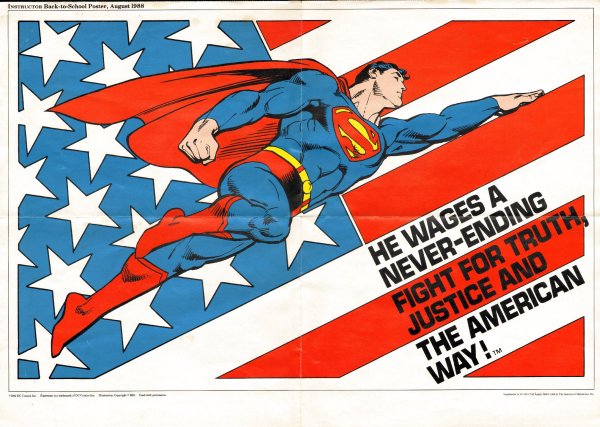
Superman 'Back to School Poster', 1988


Monday, April 25, 2011

BILL BLACKBEARD (1926-2011)

The news that Bill Blackbeard passed away on March 10th led to an outpouring of accolades and remembrances on several comic sites, some from those who knew him. I didn't know Blackbeard. To me, he was a legendary figure, his name appearing as author, editor or contributor to almost anything I read involving reprinted comic strips. Like his pirate namesake, Blackbeard transformed from a man into a mythical figure. Indeed, his contribution to comics reflects a supernatural dedication.

I had written my own pithy backstory of Blackbeard, but this uncredited writer did it so well I thought I'd run it instead1 -

Here was a man whose obsession for collecting provided a great boon for the rest of us. Researchers and publishers plumbed this most complete collection of comic strips. Strips that would be lost or forgotten, or mere footnotes, are known or collected because of Blackbeard. Yes, to some it may seem strange, that he had comics piled from floor to ceiling, in almost every room of his home, so that the world would remember Krazy Kat and his ilk. His contribution to the preservation of the comics medium is unmatched. Dean Mullaney is editor of the Library of American Comics, the premiere publisher of comic strip reprints. He put it the most succinctly on his heartfelt blog entry - "We owe it all to Bill."

For anyone interested in the life and work of Bill Blackbeard, I recommend this article by Jenny Robb, curator of the Billy Ireland Cartoon Library and Museum (click on the .pdf file).

Meanwhile, here's what Blackbeard wrote of our favorite subject, Milton Caniff2 -


1 Caniff, Milton, 'Steve Canyon Meets Happy Easter', 1977, Comic Art Publishing Co., Concord, CA, p.3
2 Ibid.
Top Photo - Blackbeard at his home, undated/San Francisco Academy of Comic Art Collection/Billy Ireland Cartoon Library & Museum